Author: wildsea

  • Digitalisation Reimagined: From Chaos to Structured Intelligence

    Digitalisation Reimagined: From Chaos to Structured Intelligence

    Digitalisation did not fail because the technology was bad. It failed because most organisations built speed on top of unstable, unstructured data. The next phase of industrial digitalisation is not about adding more tools; it is about giving existing data structure and intelligence. By turning fragmentation into a single source of truth, industrial operators can move from digital chaos to clarity and transform digitalisation into repeatable innovation.

    We are running out of patience with digitalisation

    For years, organisations have poured resources into digital transformation. Technology advanced, platforms multiplied, and expectations grew. Yet the same problem persists: the data keeps expanding, but trust in that data has not. Dashboards look modern and workflows appear automated, but when decisions matter, teams still rely on spreadsheets, PDFs and personal judgement.

    Digitalisation did not fail because of weak technology; it failed because it was built on unstructured foundations. Without structure, every new layer becomes another layer of fragility.

    The hidden truth: most transformation effort is cleanup

    Behind every glossy case study sits a less glamorous story: months spent reconciling documents, matching tags, aligning metadata, and correcting inconsistencies. Across global programmes, up to 80% of the digital effort goes into making data usable before analytics or AI can even begin.

    That is not inefficiency. It is the gravitational pull of decades of unstructured information, legacy systems, revisions, and disconnected handovers.

    We have tried to solve it with integrations, APIs, and new layers of tooling. Instead, they digitised the chaos, creating digital spaghetti rather than clarity. Digitalisation is not about collecting more data; it is about making data work together.

    That is what unlocks innovation. When information becomes fluid, trusted, and traceable, creativity accelerates. Teams stop fixing yesterday’s issues and start designing tomorrow’s improvements.

    Industrial intelligence starts where digitalisation stopped

    The companies making real progress learned a hard truth: connectivity means little without clarity.
    They are shifting from adding tools to building intelligence, a structured layer that gives data context, lineage and meaning before it is analysed or shared.

    Once that structure exists, clarity accelerates every part of the organisation. Reporting becomes faster, decisions become more confident and collaboration becomes frictionless.

    When people trust the data, they act faster, think bigger, and create smarter ways of working. Digitalisation becomes more than automation; it becomes transformation.

    From Heavyweight Chaos to Right Weight Intelligence

    The first wave of digitalisation was a land grab for platforms. If you owned the stack, you owned the data. The result: multi-year rollouts, complex integrations and operations teams overwhelmed by complexity.

    It is leaner and smarter, built on right weight intelligence, technology that works with what you already have rather than replacing everything at once.

    When we say “heavyweight,” we mean the large, slow, hard-to-change platforms that take years to roll out. “Right weight” is the opposite, technology that works with what you already have without ripping everything out.

    Assai adds a structured intelligence layer on top of your existing ecosystem. It connects DMS, ERP, CMMS, and historian data into one structured, trusted source of truth. Engineering, operations, and maintenance teams see the same information and act with confidence.

    The ROI of getting the foundation right

    When one global energy operator replaced fragmented data flows with a structured intelligence layer, the numbers spoke for themselves:

    • 2,500+ P&IDs and 500,000+ tags unified
    • 5,000+ work orders aligned across systems
    • Maintenance preparation time cut by 40%
    • Over $1 million saved annually in engineering hours

    They did not just digitise faster; they innovated faster because they finally trusted their data.

    Clarity is the new performance metric

    In the age of AI and automation, the differentiator will not be who collects the most data but who uses data most intelligently.

    Trust, structure, and traceability aren’t the paperwork side of digitalisation; they are what make innovation repeatable.

    When information is reliable, teams move from reporting what happened to predicting what is next. That is when digitalisation becomes the backbone of innovation again.

    Learn more in our Executive Guide: a Roadmap for Digital Transformation

    The field realist’s view

    Digitalisation is not a finish line; it is a shift in how organisations think. The work never really ends, but it gets smarter each cycle.

    When the data holds together, decisions get lighter, faster and a little more human again. That is the quiet power behind industrial intelligence. Progress that finally pays off.

    Ready to move from digital chaos to clarity?

    See how Assai connects the systems you already have into one layer of trusted, structured intelligence. This helps your teams spend less time cleaning data and more time improving performance.

    Book a 20-Minute Call →
    Explore the pillar: Digitalisation & Innovation – Smart Data. Smarter Decisions.

  • Why Real Engineering Productivity Starts Before the Work Begins

    Why Real Engineering Productivity Starts Before the Work Begins

    The Productivity Illusion

    In every engineering organisation, productivity is a headline metric, and constant frustration. Projects fall behind not because people don’t work hard, but because effort no longer equals output.

    We have watched this pattern repeat for decades. Technology keeps promising progress, yet most systems still add coordination work instead of removing it. The truth is, tools can only go so far; real productivity begins long before the first task with how information is governed.

    Across industries like energy, infrastructure, and manufacturing, highly skilled teams still spend their days chasing information instead of using it. They are working harder than ever, yet somehow, progress keeps slowing down.

    Because productivity isn’t about how much people do, it’s about how little gets in their way.
    And when time gets lost in those small, hidden moments, it rarely stays small.
    In capital projects, a day’s delay can ripple into millions in extended resources, lost availability, or deferred commissioning, costs that don’t show on the timesheet, but hit the bottom line all the same.

    Governance doesn’t slow work, it protects it. The companies that understand this don’t chase speed; they build control into every decision. That’s why the small things that erode productivity never get the chance to grow.

    The Hidden Productivity Drain

    Ask any engineer or document controller what slows them down, and you will hear the same things:

    • Searching for the right document.
    • Checking which version is approved.
    • Waiting for an email approval that never arrives.

    It’s not glamorous, but it’s real, and on global projects, those small delays grow into weeks of lost progress.

    We have seen it in hundreds of deployments. Teams don’t lose time because they make mistakes; they lose time because they aren’t sure which version is right, or who owns the next step. The fix isn’t more effort. It’s clarity and confidence.

    Most of the time, the issue isn’t a single tool, it is the gap between them. When systems can’t talk to each other, every handover becomes a translation exercise, and that is where productivity disappears.

    In many environments, the information exists, it’s just buried. Productivity isn’t lost because data is missing, but because people can’t see it in context or trust that it’s current.
    And every lost hour compounds in rework, duplicate effort, and idle waiting. Over time, those invisible gaps become the most expensive part of the project.

    Picture it: Imagine a single outdated drawing circulating between teams for a week. Five engineers review it, a contractor builds from it, and a rework order follows days later.No one did anything wrong. They just didn’t trust the data. That’s how unnoticed inefficiency becomes visible cost.

    Productivity is Built, Not Managed

    You can’t “manage” productivity into existence. You have to design for it; deliberately, structurally, and with the people who will see it every day.

    The most productive organisations share one thing in common: clarity. Everyone knows where information lives, who owns it, and what version is final. There is no chasing, no guessing, no shadow systems – just flow.

    Productivity isn’t a dashboard metric. It is the outcome of clear, repeatable workflows, and that’s not luck. That’s design.

    At Assai, every deployment starts with the right process logic, not just configuration. We build environments where governance is part of the process, so productivity happens naturally.

    And it has to be built at the system level. When every platform, contractor, and department follows the same logic, work moves easily from one stage to the next. That’s when coordination becomes flow and effort turns into progress.

    That principle runs through every part of the Assai platform: from Assai DMS for governed document control, to Assai Viewport for visual asset context, to Assai Enterprise for lifecycle-wide governance. Each component reinforces the same foundation: structure that connects information, people, and process without disruption.

    The Role of Structure in Real Productivity

    Structure isn’t bureaucracy. It’s the quiet framework that removes confusion before it reaches the surface.

    When we deploy Assai, we don’t talk about “going digital.” We talk about creating systems people can trust so engineers can focus on engineering.

    Because when information is reliable:

    • Reviews move faster.
    • Decisions stick.
    • Handovers don’t collapse under audit.

    That’s not theory. This is what happens in practice. One global operator that standardised document workflows in Assai reduced review-cycle time by 20% and cut rework costs by 15%. It’s one of many examples where structured governance turned measurable efficiency into lasting operational advantage, and it’s exactly the kind of outcome we help clients achieve every day. 

    That’s productivity, not measured in dashboards, but in hours saved, risks reduced, and rework avoided. And when those hours are multiplied across global projects, the financial impact is massive: not just smoother delivery, but measurable value returned to the business.

    Adoption as a Side Effect of Good Design

    Everyone talks about adoption. But adoption isn’t the objective – it’s simply what happens when something actually works.

    People adopt tools that help them do their jobs better. And they abandon the ones that get in the way.

    High-performing organizations don’t force adoption. They build systems that feel intuitive and match how engineers and controllers think. When the experience makes sense, compliance becomes routine, and routine turns into speed.

    Clarity only improves productivity if it’s practical. If a process is too hard to follow, people won’t follow it. No matter how well-intentioned it is.

    True productivity becomes self-reinforcing when the system supports the way people work, instead of people having to work around the system.

    The Takeaway

    After thirty years inside complex programs, we have learned that real productivity doesn’t come from dashboards, it comes from design.

    At Assai, we call it engineered clarity: workflows, connections, and approvals built to keep teams aligned from design through operations. When work moves without resistance, effort finally turns into progress. Because every hour saved early prevents days of delay later. And in an industry where billions hinge on schedule certainty, that prevention is the difference between performance and penalty.

    From project documents to visual assets to enterprise data, the principle stays the same: structure first, friction nowhere.

    Productivity isn’t a target you chase. It’s a condition you create.
    And that’s what Assai builds: clarity that compounds into performance.


    See how Assai turns clarity into measurable productivity across your projects.
    Explore the Productivity & Adoption Framework →

  • Deployment Discipline: Why Flexibility Depends on Structure

    Deployment Discipline: Why Flexibility Depends on Structure

    In complex engineering environments, the success of a system depends less on how powerful it is and more on how well it is deployed.
    Even with the right tools and capable teams, projects struggle when deployment is not designed for the realities of large-scale operations.
    It is rarely the software that fails. It is the process around it.

    • Projects depend on accurate information.
    • Sites operate under different compliance standards.
    • IT manages multiple integrations, often inherited from decades of previous investments.

    And yet, most deployments still rely on the same oversimplified promise: “We’ll configure it and go live.”
    That mindset belongs to a different era.
    In today’s engineering landscape, where systems, contractors, and regulators are interconnected, structure is what enables flexibility, not what restricts it.

    The Blind Spot in Engineering Deployments

    Deployment is often treated as a simple technical handover between configuration and operations.
    In reality, it is the point where governance succeeds or collapses.

    Every rollout must align three elements:

    • Data: legacy drawings, models, and records with deep version histories
    • People: teams with different rules, pressures, and habits
    • Governance: the traceability needed to withstand audits, reviews, and handovers

    When these elements are not managed under one framework, cracks appear.
    They always surface later, during modification, inspection, or transfer of ownership.

    Deployment is not a stage. It is a discipline.

    A Deployment Framework Built on Governance

    At Assai, deployment is approached the same way engineers design systems: through structure, verification, and iteration.

    • Phased progression keeps change controlled and predictable
    • Embedded governance ensures document control and auditability during configuration, not after
    • Transparency gives stakeholders visibility into what is working and what is not, before it becomes a risk

    This is not bureaucracy.
    It is engineering logic applied to implementation.

    Integration Without Rebuild or Disruption

    Most organizations do not need a new ecosystem. They need their current systems to work together.
    Assai integrates across ERPs, maintenance software, and design tools, creating a single governed information layer instead of forcing wholesale replacement.

    This allows modernization without halting active projects or losing operational history.
    It is integration without rebuild, and one of the clearest differences in Assai’s deployment approach.

    Why Deployment Standards Must Evolve

    Across energy, infrastructure, and manufacturing, one lesson is consistent: deployment maturity should be treated as a measurable KPI.
    It is just as strategic as uptime, safety, and cost efficiency.

    The future of engineering information management will be defined not by who builds the most features, but by who deploys with control, repeatability, and governance at scale.

    That is the real benchmark of progress, and it is the standard Assai is setting.

    Further Reading

    We have captured our full deployment framework and lessons learned from global engineering programs in our recent overview:
    Deployment Flexibility That Fits Reality

  • The Return on Intelligence

    The Return on Intelligence

    Why the Smartest ROI Starts with Trust

    For years, capital projects have chased ROI through systems, dashboards, and digital transformation promises. And yet, most leaders still ask the same question: why aren’t we seeing the return we expected?

    It’s not for lack of effort. It’s because the data driving decisions can’t be trusted.

    ROI has become one of the most overused metrics in business; quoted in every digital strategy yet rarely achieved in practice. Too often, performance gets buried under layers of technology meant to simplify it. Every new system promises efficiency. Every dashboard promises insight. But when the underlying information is incomplete, duplicated, or outdated, the return never materialises. That’s the hidden cost of digital progress and fixing it is where the next generation of ROI begins.

    The Shift No One’s Talking About

    Across every major sector, oil & gas, nuclear, infrastructure, renewables, projects are now data-rich but insight-poor. Information lives in silos, duplicated across systems, versioned beyond recognition.

    The result? Hidden waste. Missed opportunities. ROI that evaporates before it reaches the boardroom.

    Industry research shows that poor information quality can consume up to 14% of total project cost, often tens of millions of dollars per major facility. That’s not inefficiency, that’s value silently draining away because teams can’t trust the information in front of them. That’s why Assai talks about the Return on Intelligence, the measurable payoff that happens when information becomes reliable by design. It’s not a slogan. It’s the performance edge that comes when you can trust your data the first time, every time.

    The New Measure of Control

    Real performance doesn’t come from adding more tools, it comes from making what you already have finally work as one. That’s Intelligent Control, Assai’s approach to turning complexity into clarity.

    • Prevent rework with structure.
    • Eliminate silos through connectivity.
    • Enforce governance automatically, without friction.
    • Make performance transparent in real time.

    When information moves with this level of integrity, decision-making accelerates, rework disappears, and ROI compounds quietly in the background.

    Across our experience, we’ve seen the same pattern repeat.

    • An engineering team that cut retrieval times by 60%.
    • A petrochemical operator that reduced duplicated work by 70%.


    Each gain looks small, but together they redefine how performance scales. That’s the real return on intelligence in action.

    Why It Matters for Leaders

    ROI used to be measured in cost and schedule. Now it’s measured in confidence, the confidence to decide without hesitation because every dataset, document, and model can be trusted.

    This shift is being accelerated by AI and analytics, where accuracy defines credibility. Automation doesn’t fix poor data; it amplifies it. And in that world, information readiness beats feature checklists every time.

    The organisations that treat information as infrastructure are already pulling ahead. They move faster because they don’t stop verifying. They deliver more because they don’t redo what’s already right. They make better decisions because their intelligence is built on truth, not noise.

    See the Full Picture

    Assai has spent over three decades helping project owners and operators build trust into the way information flows. Our new study, The Return on Intelligence Report, captures what we’ve learned, and what the highest-performing teams are doing differently.

    It’s not another analysis of technology. It’s a practical exploration of how structure, governance, and trust translate into measurable performance in capital projects.

    If you’re ready to see where your ROI is really hiding, and how to get it back, start here.

    Download The Return on Intelligence Report and discover how structured information turns control into measurable performance.

    Because the next frontier of ROI isn’t automation. It’s intelligence.

    About Assai

    Assai helps capital-project owners and operators bring order, control, and intelligence to the world’s most complex data environments.
    Because in industries where every decision counts, the smartest investment isn’t more data — it’s knowing you can trust what you already have.

  • Joint Ventures and Asset Divestment

    Joint Ventures and Asset Divestment


    Introduction

    When joint ventures end or assets change hands, documentation often gets left behind, or worse, loses all structure and traceability. In this expert article, we explore why continuity breaks down during divestments and how leading teams use standards like CFIHOS, and systems like Assai, to ensure reliable, auditable information survives the transition.

    Continuity Through Change: Why Asset Documentation Must Outlast Ownership

    When ownership changes, the responsibility for maintaining accurate, complete, and accessible asset documentation remains. The physical asset may transfer smoothly. But the operational knowledge – what was built, why it changed, how it is maintained is embedded in documentation. And that part often doesn’t survive the transition.

    We have seen it time and again: joint ventures winding down, asset portfolios changing hands, operators stepping into someone else’s system. What arrives is a handover package, but what is missing is the structure, clarity and trust needed to make use of it.

    What You Inherit Isn’t Always What You Need

    Transitions are rarely clean. Documentation may be delivered, but rarely in a usable, verified, or fully traceable form. Systems are switched off. Metadata is lost. Context disappears. The new team inherits responsibility without confidence.

    And that affects everything downstream: maintenance, inspection, compliance, decision-making. Instead of starting where the last team left off, they start from scratch, in a fog of uncertainty.

    Between project closeout and acquisition, the asset may have undergone years of changes, from maintenance-driven updates to major turnarounds. But unless these changes are rigorously reflected in the documentation, the inherited picture is partial, inconsistent, or outdated.

    What Breaks, Quietly

    Loss of continuity doesn’t trigger alarms. It shows up slowly: in duplicated work, missed steps, second-guessing, or shadow systems built just to cope.

    The documentation exists. But no one is sure if it is right. So, trust erodes. And with it, efficiency.

    What Leading Teams Do Differently

    They design for continuity. Not at the end of the project, but from the beginning.

    They treat information as something that will change hands. And they manage it accordingly: with governance, standards, and systems, like Assai, that ensure version integrity, auditability, and access survive the transition.

    While the original project team may not prioritize long-term transitions – due to cost, scope, or shifting responsibility – leading organizations recognize that continuity must be designed in from the start, even if the team changes.

    They assume the people who built the system won’t be there when it runs. And they prepare for that.

    A Better Question to Ask

    Most teams focus on what they will receive: the files, folders, and formats. But the better question is: What is the operational value of what we’re inheriting?

    •          Are the drawings linked to the systems they govern?
    •          Are the approvals visible, the revisions tracked, the context preserved?
    •          Can new teams move forward without first rebuilding the past?

    When those answers are unclear, the risk isn’t technical. It is structural. And it doesn’t take long for that uncertainty to show up in decisions.

    Addressing these gaps requires more than a checklist, it takes a structured framework. Standards like CFIHOS, the Capital Facilities Information Handover Specification, provide clear guidance on what information should be handed over. To ensure that guidance translates into real operational value, systems like Assai are essential. Assai brings CFIHOS principles to life by keeping documentation linked, auditable, and usable long after ownership changes. This is what sets Assai apart: it does not just store information; it enables continuity across transitions.

    Final Insight

    Ownership may change. But the risks don’t disappear, and the expectation to make informed, timely decisions remains.

    When information continuity is treated as a lifecycle discipline, transitions don’t become resets. They become handovers in the true sense of the word. And in asset-heavy industries, that difference can define everything that follows.

    This is what sets Assai apart: it does not just store documentation. It preserves its integrity, auditability, and accessibility across transitions and ensures that continuity is not lost when ownership changes.


  • From Closeout to Continuity: Why Document Control Must Survive Project Handover

    From Closeout to Continuity: Why Document Control Must Survive Project Handover

    At the end of a capital project, handover can appear straightforward. Closeout packages are assembled, documents are marked as final and responsibility passes to the asset owner. On paper, the handover is complete. In practice, operations may still struggle to determine which information can be trusted.

    Engineering information handover transfers approved project documents, metadata and supporting records to operations, together with the revision history, responsibilities and controls needed to keep that information usable throughout the asset lifecycle.

    At Assai, we have been part of these transitions for over three decades. We have seen documents handed over on USBs or shared drives with thousands of files, each carrying its own naming logic. We have spoken to operations teams who spent weeks searching for the right drawing, only to learn that it was not the latest revision. We have worked with maintenance leads who could not rely on the systems left behind.

    We have also seen engineers use local copies to stay productive and field teams work from conflicting revisions because they could not trace which document was current.

    In each case, the files had been delivered, but part of the control surrounding them had been lost. This is what we refer to as the handover gap.

    Document control needs to continue into operations.

    Why the Handover Gap Happens

    The formal requirements of handover are usually met. Contractual deliverables are checked, closeout packages are accepted and ownership shifts. However, the process often focuses more on whether the information has been delivered than on how it will remain controlled afterwards.

    During a project, engineering documents are supported by document numbering, metadata, workflows, approval statuses, revision histories, transmittals and audit trails. These controls show where a document came from, what has changed and whether it is approved for its intended use.

    When project systems are closed and information is exported into folders or archives, this structure does not always move with the documents. Metadata can become separated from files, revision histories become difficult to follow and vendor documentation may lose its relationship to the wider engineering record.

    This can happen whether information is handed over at project closeout or progressively during execution. The gap appears when accepted information leaves the controlled environment without an equivalent structure being established for operations.

    Frameworks such as CFIHOS help define what information must be delivered and how it should be structured. This provides an important foundation, but the asset owner still needs the ownership, processes and systems required to maintain that structure after acceptance.

    What Document Control Must Carry Forward

    Project and operational organisations have different responsibilities, workflows and priorities. Document control does not need to continue in exactly the same form, but the controls that make engineering documentation reliable must remain.

    From what we have seen, several elements are particularly important during this transition:

    • Approved handover packages must remain identifiable and protected from uncontrolled change.
    • As-built documentation must be clearly distinguished from earlier design and construction revisions.
    • Vendor records must retain their classification and relationship to the wider engineering record.
    • Document status must show what is current, superseded, under review or no longer valid for use.
    • Revision history must preserve previous revisions, reviews and approvals.
    • Lifecycle traceability must continue as documents are changed during operations.

    For the asset owner, this means taking ownership of the controlled engineering record, not only accepting a collection of deliverables. For engineering managers, it provides a dependable starting point for maintenance, investigations and future modifications. For document-control teams, responsibility for governance changes at handover, but it does not disappear.

    When Control Stops, Teams Compensate

    When people cannot rely on the formal record, they find practical ways to continue working. They keep local copies, create their own registers or ask colleagues which revision they normally use.

    These workarounds may solve the immediate problem, but they also create more places in which outdated or uncontrolled information can circulate. Teams then spend additional time checking documents, confirming their status and reconstructing revision history before work can proceed.

    The consequences become particularly visible during maintenance, modifications and audits. Teams may need to re-establish design intent, confirm which documents were approved and reconstruct decisions that should already be traceable.

    This is not a failure of the people involved. It is what happens when the control that supported them during the project is no longer available in operations.

    Continuing Document Control with Assai DMS

    Ensuring continuity does not start with a tool. It starts with understanding how operations will use and maintain the information once the project is complete.

    In practice, the objective is not to keep every project system running. It is to retain the document structure and history that operations will continue to depend on.

    This is where Assai DMS has a practical role. It provides a controlled engineering system of record for approved handover packages, as-built documentation, vendor records and revision history.

    During the project, Assai DMS supports document numbering, metadata, reviews, approvals, transmittals and revision management. At handover, the approved documents and the history behind them can remain together within a governed environment.

    After handover, current and superseded revisions remain distinguishable. When a document is updated following a modification, the new revision can continue through controlled review and approval while the earlier record remains traceable.

    Where a previous handover has not gone as planned, control can still be restored. This normally starts by establishing an approved operational baseline, bringing the relevant documentation and history under structured control and defining how future changes will be governed.

    What to Consider

    If you are preparing for a handover, or dealing with the effects of an earlier one, consider:

    • Do operations teams trust the documentation they use?
    • Is it clear what is current, approved, superseded or still under review?
    • Can decisions and revisions be traced from the project through to the present?

    The answers should be visible in the working engineering environment, not only in a project closeout checklist.

    From Closeout to Continuity

    After three decades of seeing project information move into operations, our experience is that the difference is rarely whether the files were delivered. What matters is whether the people responsible for the asset can still determine what is approved, what is current and how the documentation has changed after the project team has moved on.

    A dependable handover preserves both the documents and the controls that give them meaning.

    Document control changes ownership at handover, but it does not end.

    Preparing for Project Handover?

    See how Assai DMS supports the transition from approved project documentation to a controlled and traceable operational record.

    Book a demo

  • Beyond the Mirror: Why Digital Twins Are Only as Smart as the Information Behind Them

    Beyond the Mirror: Why Digital Twins Are Only as Smart as the Information Behind Them

    Introduction

    Digital Twins are reshaping how asset-intensive industries operate. With dynamic 3D models, real-time data feeds, and simulation capabilities, they promise to transform planning, operations, and maintenance. But here’s the truth few say out loud:

    A Digital Twin is only as useful as the quality of the information feeding it.

    That means one thing: if your current documentation isn’t trustworthy and structured, your Digital Twin will not deliver the value you expect.

    This is where a Document Management System (DMS) becomes essential. Not just any DMS, but one designed to support the complexity, collaboration, and lifecycle needs of industrial assets.

    Why a Digital Twin Needs More Than Visuals

    It’s easy to be impressed by a sleek interface or a rotating 3D asset map. But beneath that surface, every Digital Twin relies on a foundation of structured, accurate information. Confidence in what you see starts with knowing the image is reliable, which requires precise engineering drawings and specifications. The image truly comes to life when maintenance and inspection records, revision trails, and approved documentation are all current and readily accessible in one view.

    When this information is out of date or stored in disconnected systems, the result is a gap between the model and reality. That gap reduces the Digital Twin to little more than a static display, disconnected from the asset it represents, with no value for the day-to-day work processes.

    The Role of DMS

    A modern DMS does more than securely store files. It ensures that teams always have access to the correct version of each document, with metadata preserved and linked to the relevant assets. It keeps information flowing between disciplines and locations, breaking down silos that slow progress and increase risk. A great DMS also supports collaboration, both internal and external, and facilitates Management of Change (MoC) processes by keeping documentation organized, accessible and up to date. 

    When the DMS is properly integrated into operational procedures, documentation becomes not just available, but actionable. This means better decisions, fewer delays, and more reliable outcomes across the lifecycle of the asset.

    Integration That Works in Practice

    When DMS and Digital Twin technologies are tightly connected, real value emerges. Field teams don’t have to second-guess the source of a drawing. Planners can initiate tasks based on verified information. Document controllers spend less time chasing files and more time maintaining control.

    This isn’t just about improving speed. It’s about ensuring resilience. With the right embedding, the model stays aligned with the real-world asset even as teams change, systems evolve, and complexity increases.

    Final Thought

    Digital Twins aren’t magic. They’re reflections — of the information you manage, the systems you trust, and the discipline behind your documentation.

    At Assai, we help organizations ensure that the structure behind the screen supports the decisions in front of it. Because a Digital Twin is only as strong as the documentation and processes behind it.

    If you’re investing in visualization, invest in making it real. That starts with information that’s current, verified, and ready to support action.

  • Concurrent Engineering in Assai: Smart Collaboration on Maintenance and Projects

    Concurrent Engineering in Assai: Smart Collaboration on Maintenance and Projects

    Managing operational assets inevitably involves maintenance, repairs, and modifications. Whether it’s scheduled maintenance, expansions, or partial decommissioning, proper documentation is key.

    The Concurrent Engineering (CE) module in Assai simplifies and streamlines the management and sharing of documentation.

    How does it work?

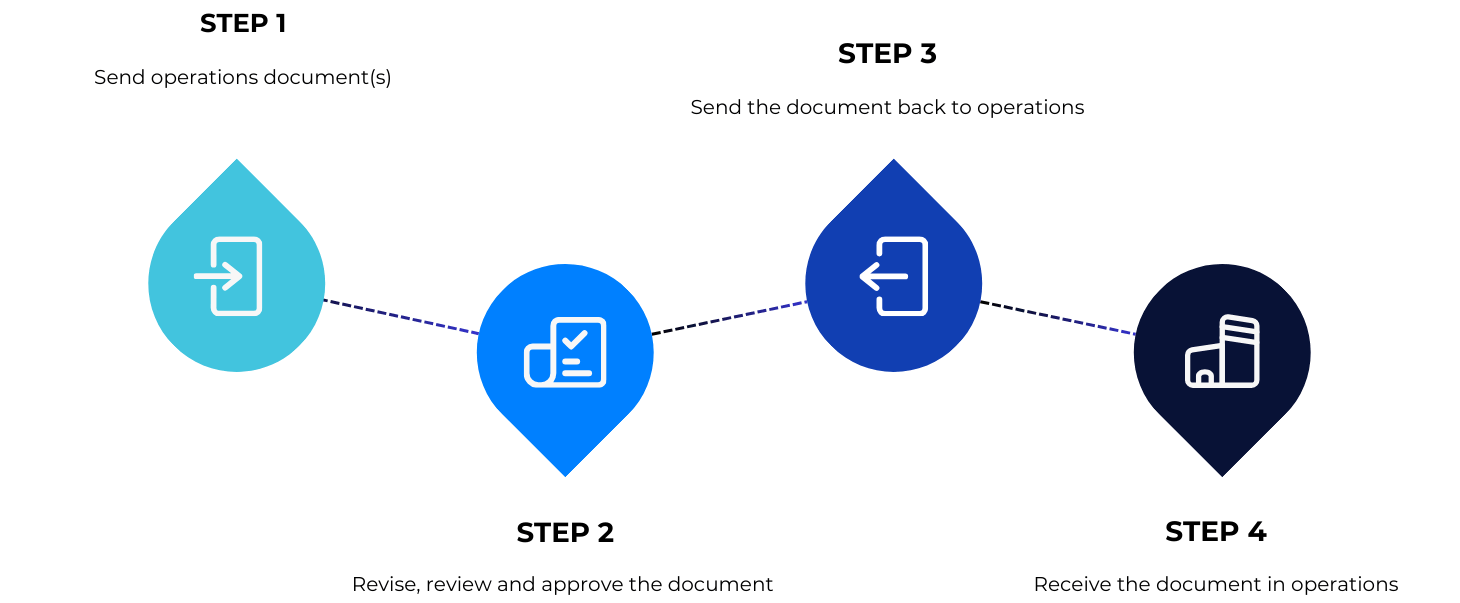
    The CE module enables changes to be made to master documents (as-builts) without affecting ongoing operations. The documents are revised and updated in a separate project area, and once fully approved, the new revision is returned to Operations as the latest revision.

    Concurrent Engineering (CE) in practice

    Four steps in a process: send documents, review and approve, send back to operations, and receive in operations.

    Why is the CE module so useful?

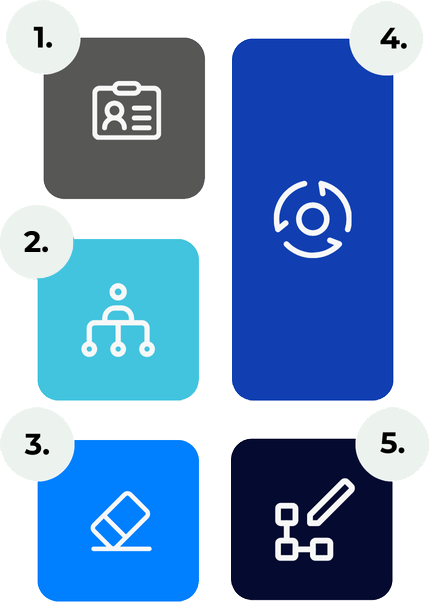
    Five numbered benefits of the CE module, each with an icon.

    1. Protection of master documents

    Master documents remain unchanged until updates are approved and processed.

    2. Work simultaneously on multiple projects

    Different CE projects can receive the same master documents, each with its unique copy.

    3. Smart conflict management

    Multiple CE projects can update the same master documents simultaneously. Assai ensures seamless collaboration, preventing conflicts by allowing updates only on the latest master revision, eliminating any risk of information loss.

    4. Flexibility and control

    Updates can be made in a separate project without disrupting ongoing operations.

    5. Full traceability

    All activities within the CE module are logged, giving you complete insight into current and completed projects.

    Additional benefits

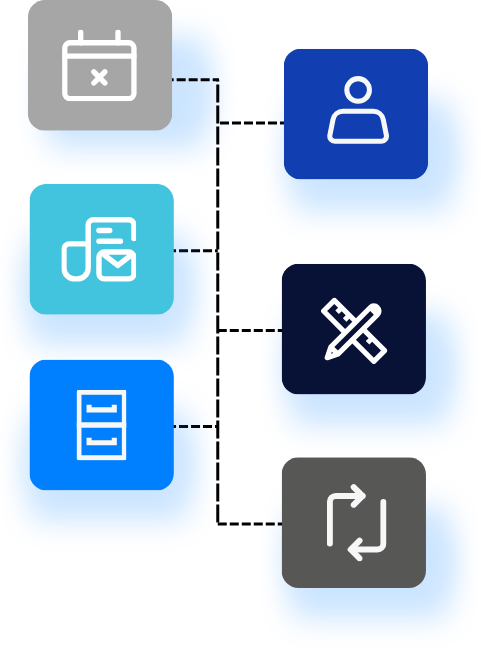
    Flowchart of a CE project: planning, documents, archive, people and editing, connected in a loop.
    • The smart CE module intuitively generates warnings when there is a potential conflict.
    • Assai’s tools provide assistance to ensure smooth operations.
    • Automatic email notifications keep all stakeholders informed.
    • You decide if and when documents are updated; CE transfers can always be cancelled.
    • Clear notifications and reporting ensure a seamless process.

    With the CE module, Assai provides a powerful solution to keep CE projects running smoothly while safeguarding the integrity of master documents.

    Want a smarter way to manage document updates without disrupting operations?

    See how Assai’s CE Module keeps master documents intact while teams collaborate efficiently. Book a demo or contact us.

  • 5 Ways Assai 11 Revolutionizes Document Management

    5 Ways Assai 11 Revolutionizes Document Management

    Managing documents in industries like renewable energy, oil & gas, and mining is no small
    feat. Missed reviews, bottlenecks, and compliance risks can cost time, money, and even
    reputations. That’s why we built Assai 11—to help your team overcome these challenges
    with smarter, faster, and simpler document management. Here’s how Assai 11 is
    transforming the way you work.

    1. Never Miss a Deadline: Automate Your Periodic Reviews

    Missing review deadlines can jeopardize compliance and delay projects. With Assai 11, you
    can automate periodic reviews, setting intervals to ensure documents are always up-to-date
    and valid. Automated reminders keep your team on track, saving valuable time and reducing
    risks.

    Key Benefits:
    – Eliminate missed deadlines.
    – Ensure regulatory compliance effortlessly.
    – Free your team to focus on higher-priority tasks.

    2. See the Big Picture Instantly: Gain Real-Time Insights

    In complex industries, bottlenecks often arise from a lack of visibility into document reviews.
    Assai 11 provides unique visual indicators that show the status of every document in real-
    time, giving teams the clarity needed to act quickly and collaborate effectively.

    Key Benefits:
    – Increase transparency across projects.
    – Simplify team collaboration.
    – Resolve bottlenecks faster.

    3. Say Goodbye to Errors: Flawless Document Submissions

    Manual document submissions are time-consuming and prone to errors. Assai 11’s
    automatic document number recognition ensures every submission is accurate and
    streamlined, reducing friction for contractors and teams alike.

    Key Benefits:
    – Eliminate manual entry errors.
    – Improve submission quality.
    – Save time on repetitive tasks.

    4. Keep Projects Moving: Simplify Staff Transitions

    Team changes can disrupt workflows and create delays. Assai 11 ensures seamless
    handovers by allowing responsibilities and outstanding tasks to be reassigned with just a few
    clicks. Projects stay on track even during transitions.

    Key Benefits:
    – Enable smooth handovers without delays.
    – Maintain continuity during team changes.
    – Avoid missed actions or responsibilities

    5. Work Smarter, Together: Enhanced User Experience

    Clunky systems slow teams down. Assai 11’s user-friendly interface ensures you can access
    critical tools, like external references in document screens, quickly and efficiently. Teams can
    spend less time navigating and more time collaborating.

    Key Benefits:
    – Faster navigation.
    – Improved external collaboration.
    – User-first design for productivity.

    Assai 11 isn’t just about features—it’s about empowering your team to work with confidence,
    clarity, and efficiency. By automating processes, simplifying collaboration, and giving real-
    time insights, it enables you to focus on what really matters: delivering exceptional results.
    Ready to redefine document management?

    Learn more about Assai 11 and how it can help your team

    DMS,Energy,Document Management
  • How to Modernize the Document Management System of an Energy Company?

    How to Modernize the Document Management System of an Energy Company?

    A document management system (DMS) is the backbone of smooth operations and successful projects for an energy company. But what happens when that system becomes outdated and can no longer meet the demands of a fast-evolving industry? How can inefficiencies, compliance risks, and frustrations be avoided while positioning the company for growth? Let’s explore what it takes to modernize a DMS and how we approach such a transformation.

    Understanding the Challenges

    Energy companies operate in a complex environment where the risks of disorganized document management are significant. A single missing document or an outdated version can lead to costly project delays, compliance issues, or even reputational damage. Beyond avoiding these risks, a modernized DMS is essential for staying competitive, especially as companies strive to meet ambitious sustainability goals like tripling renewable capacity by 2031.

    The challenge lies not just in upgrading technology but also in ensuring the system aligns perfectly with the organization’s operational needs, regulatory requirements, and long-term objectives.

    The Key to a Successful Transformation

    When we partner with an energy company to modernize their DMS, we start by understanding their unique challenges and goals. This isn’t just about providing software—it’s about creating a solution that integrates seamlessly into their workflows and enhances their daily operations. Here’s how we approach this process:

    1. Comprehensive Assessment
      First, we evaluate the existing system to identify gaps, inefficiencies, and risks. What’s working? What’s not? And how can we improve? This thorough analysis helps us design a tailored roadmap for the transformation.
    2. Collaboration at the Core
      A successful DMS upgrade depends on collaboration. We work closely with the company’s teams to combine our expertise in document management with their deep understanding of their operations. This synergy ensures the solution meets their specific needs, from compliance requirements to user preferences.
    3. Focus on User Adoption
      Even the most advanced system is only as effective as its users. That’s why we place a strong emphasis on training and engagement. We ensure team members are comfortable with the new system through tailored training programs, empowering them to use the tools to their full potential.
    4. Streamlined Implementation
      Implementing a new DMS can feel daunting, but our step-by-step approach minimizes disruption. By setting clear milestones and providing ongoing support, we make the transition as smooth as possible, ensuring operations stay on track throughout the process.

    The Impact of a Modernized DMS

    When done right, a modernized DMS delivers far-reaching benefits:

    • Efficiency Gains: Automated workflows reduce errors, speed up processes, and free up time for high-impact work.
    • Enhanced Compliance: The system ensures that documents meet regulatory standards, reducing risks and boosting confidence.
    • Improved Collaboration: With a single source of truth, teams can access accurate, up-to-date information, improving communication and productivity.

    For energy companies, these improvements translate into more than operational benefits—they become enablers of broader goals, such as advancing renewable energy projects and driving innovation.

    Why This Matters for Energy Companies

    Modernizing a DMS is not just a technological upgrade; it’s a strategic shift that supports the energy company’s mission and vision. It enables teams to work smarter, not harder, and ensures that the organization can meet the demands of a dynamic industry while staying focused on its sustainability objectives.

    By combining technical expertise with a deep understanding of the energy sector, we create solutions that empower companies to excel. Every document is accounted for, every process is optimized, and every team member is equipped to contribute to success.siness, feel free to send us a quick message today.

    DMS,Energy,Document Management